If someone asks you, “Who are you?”, how do you answer? You might give your name, your profession, your nationality, or perhaps describe your core beliefs. But is that really the whole picture?
In our heavily connected world, human identity is no longer just tied to where we are born or the physical culture we grow up in. Due to the explosive rise of new media, our identities are constantly shifting, blending, and sometimes even clashing. Let’s dive into how modern communication is reshaping who we are by looking at the three major layers of identity.
The Three Faces of Identity
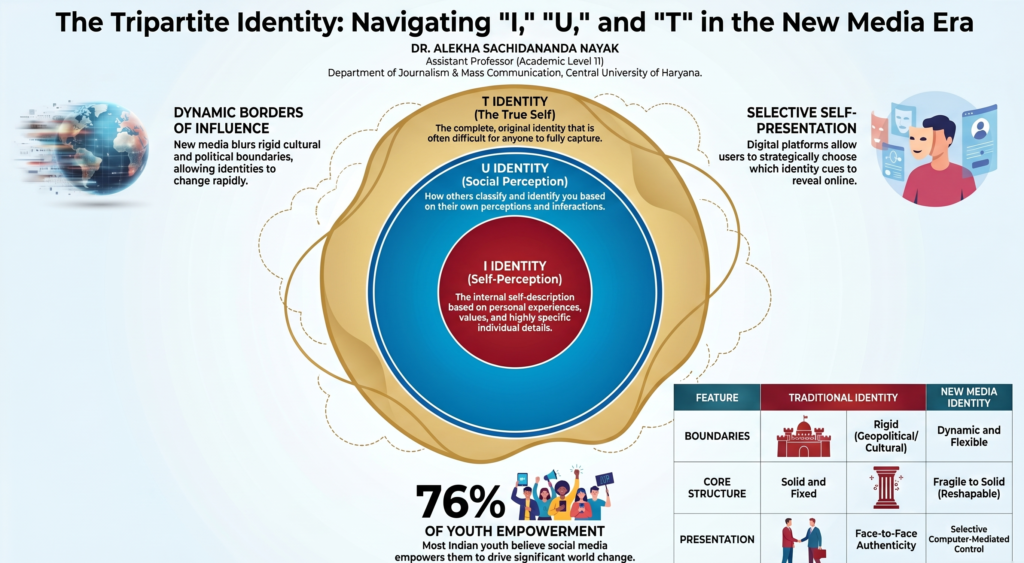
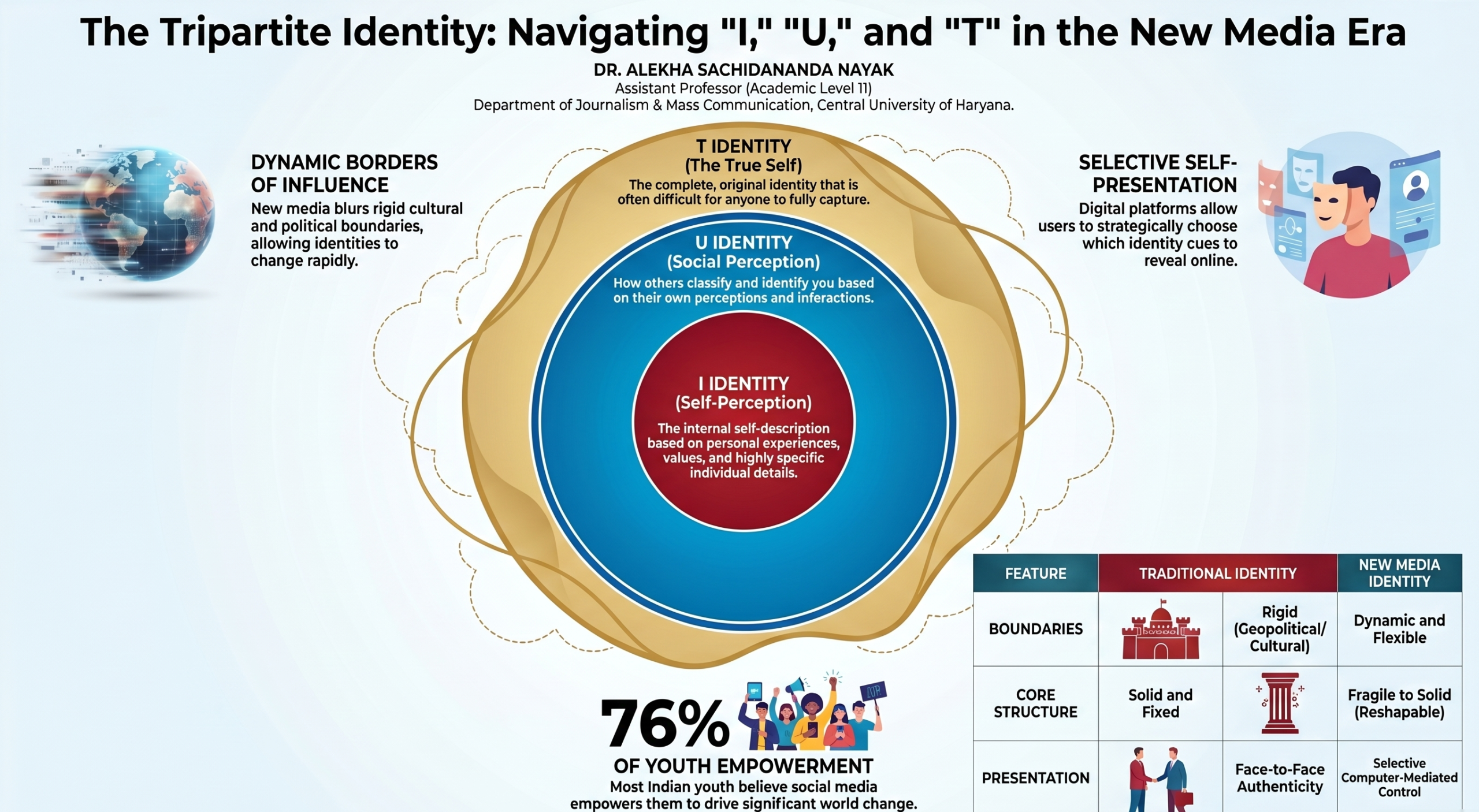
According to identity and communication researchers, it is almost impossible to figure out a person’s 100% original identity just by looking at them. Instead, identity is broken down into three distinct categories:
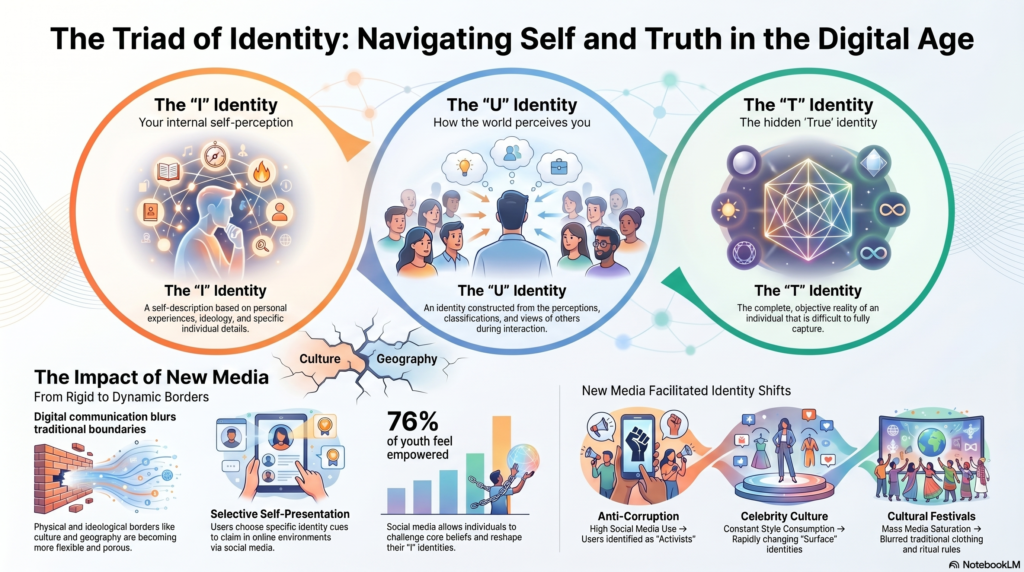
- The “I” Identity: This is your self-detected identity—the way you view yourself. It starts germinating when you are a baby, built from the repeated sounds, familiar faces, and closest information around you. Over time, your family, teachers, and personal ideology construct the rigid “core” of your “I” identity.
- The “U” (or You) Identity: This is how others perceive you. When people interact with you over time, they collect information about your likes, dislikes, and behavior, and use that data to classify and identify you.
- The “T” (True) Identity: Because human behavior and attitudes are not always constant, there is a strong chance we misinterpret our own “I” identity and the “U” identity of others. Hidden beneath these layers lies the “T” identity—your complete, unvarnished true self, which is incredibly difficult for anyone to fully decode.
The Invisible Borders Shaping Us
What actually molds these identities? They are shaped by Identity Influential Factors (IIFs). These are forces like your geographical territory, your cultural traditions, your political beliefs, and your family history.
Historically, these IIFs had very rigid borders. If you lived in a specific country and followed a specific culture, your identity was largely fixed to that group for a long time. Your core identity was solid, protected by a slightly flexible surface.
The New Media Shake-Up
Here is where the internet and social media completely disrupt the formula. Today, the borders of these Identity Influential Factors are no longer rigid; they are incredibly dynamic and flexible.
1. Curating the “U” Identity Online On social networking sites, we engage in “selective self-presentation”. We choose exactly which photos, achievements, and emotions we want to share. Because computer-mediated communication allows us to present ourselves in a highly controlled way, the “U identity” that others form about us online can sometimes be misleading or even completely fake.
2. The Rapid Shifting of the “I” Identity New media also directly attacks the borders of our “I identity.” With a single click, you can cross into a completely different cultural border or belief system. We see this constantly in modern social movements. For example, during the anti-corruption movement in India, many youths identified deeply as activists supporting Anna Hazare online. Shortly after, that same dynamic identity shifted to supporting the Aam Aadmi Party, and then later shifted again to supporting Narendra Modi. Because media content is dynamic, it makes our personal identities dynamic as well.
Finding the Truth in the Noise
So, if social media allows us to fake our “U identity” and constantly flip our “I identity,” how do we ever find the truth?
New media is a double-edged sword. While it creates a lot of noise, it also gives us access to diverse views, allowing us to see all sides of reality and eliminate negative factors. To find our “True” (T) identity, we cannot be passive scrollers. We must become conscious, literate observers of the media we consume. By looking past the propaganda, fake online personas, and fleeting digital trends, we can slowly uncover the true identity of ourselves and the people around us.